红字
Chinese teenagers flock to tech frontline to touch the future amid AI study-tour boom_我的网站

A |
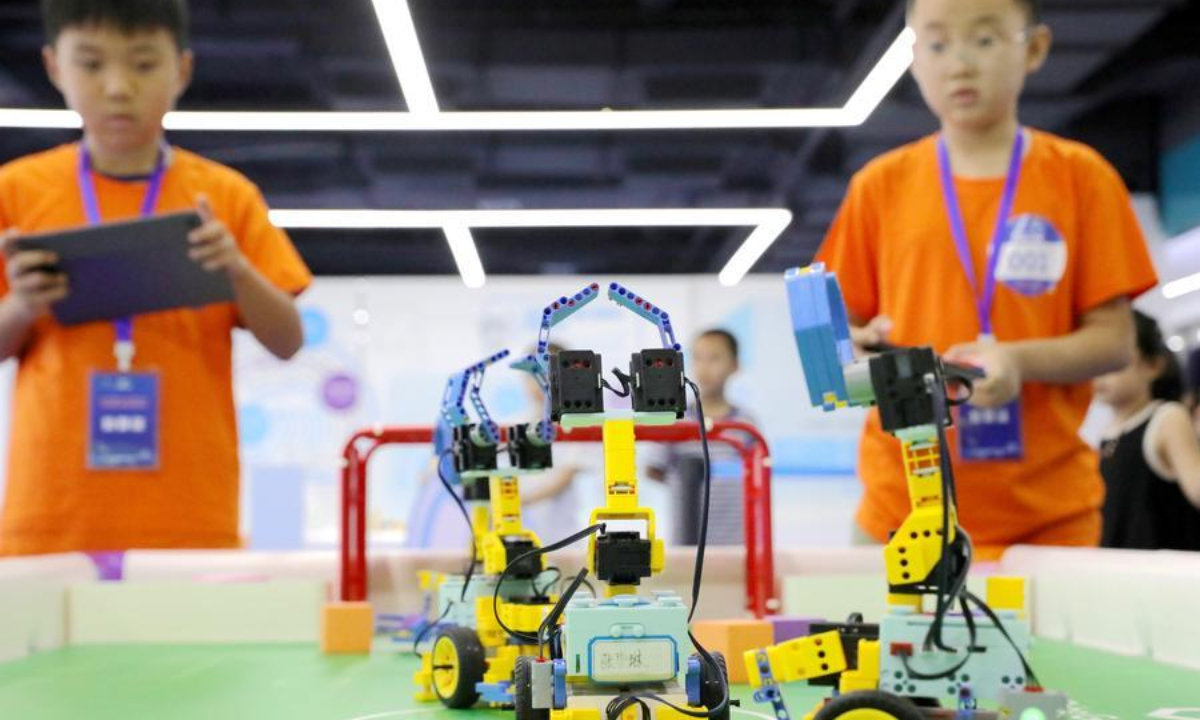
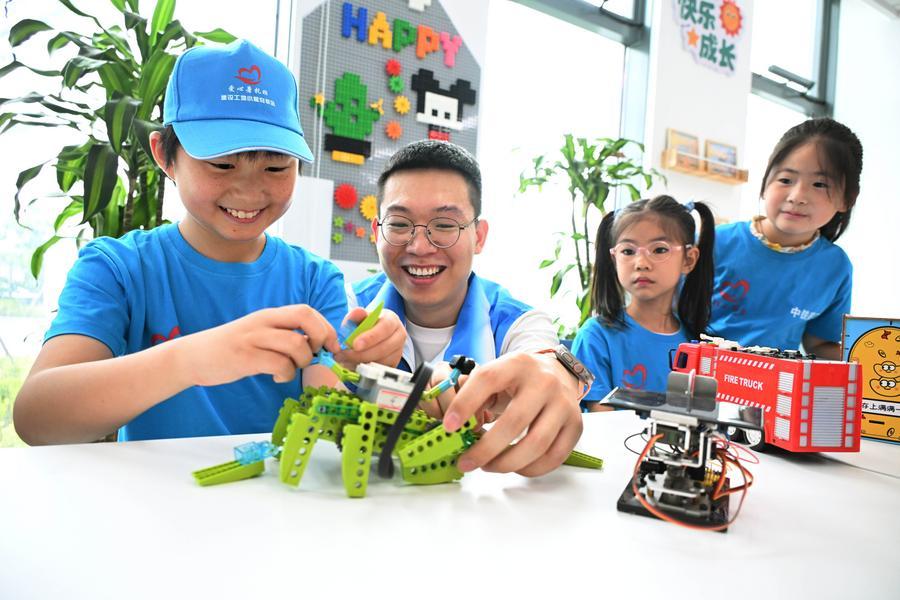
At a nearby workbench, nine-year-old Zhang Qihang was busy assembling a robot of his own. "Building robots is awesome! I can let my imagination run wild," he said, beaming with excitement.
This was the scene at an artificial intelligence (AI) summer camp -- part of a new wave of study tours gaining traction across China. Moving beyond textbooks, students are flocking to tech giants, university labs and science centers, eager to get hands-on experience with cutting-edge AI technologies and see firsthand how the future is taking shape.
AI STUDY-TOUR BOOM
During this summer vacation, AI-themed study tours have begun to gain ground, with bookings surging 370 percent year on year, according to online travel platform Ctrip.
To tap into the growing demand for AI-focused tech tourism, a travel agency based in Nanjing, east China's Jiangsu Province, began adding visits to technology companies to its trip programs last summer. "On our Shanghai-Hangzhou independent study tours, AI-related activities now account for more than 80 percent of the itinerary," founder Zhu Ping said.
The boom is unfolding against the backdrop of China's broader AI boom, powered by a wave of homegrown models and applications. For a growing number of Chinese teenagers, AI tools such as DeepSeek, Kimi and Doubao are becoming familiar companions in their everyday lives.
The number of AI enterprises in China had surpassed 6,000 last year, and the output value of the core AI industry was projected to exceed 1.2 trillion yuan (about 177 billion U.S. dollars) during the same period, representing a year-on-year increase of nearly 30 percent.
Moreover, China was home to more than 140 humanoid robot developers in 2025, with shipments reaching 14,400 units -- accounting for 84.7 percent of the global market, according to an industry research report.
To help children prepare for an AI-driven future, China unveiled an "AI Plus Education" initiative earlier this year, encouraging schools to take AI learning beyond the classroom through after-school programs and hands-on activities. The goal is to help students understand and use AI properly, while sparking curiosity, nurturing creativity and honing their critical-thinking and problem-solving skills.
Today, the AI study-tour wave is sweeping through China's schools, as primary and secondary schools incorporate it into their educational programs. Parents are taking their children into the heart of the tech industry to see how AI transforms the real world.
China's tech-tourism boom is also drawing international visitors keen to get a close-up look at the innovation behind "Made in China."
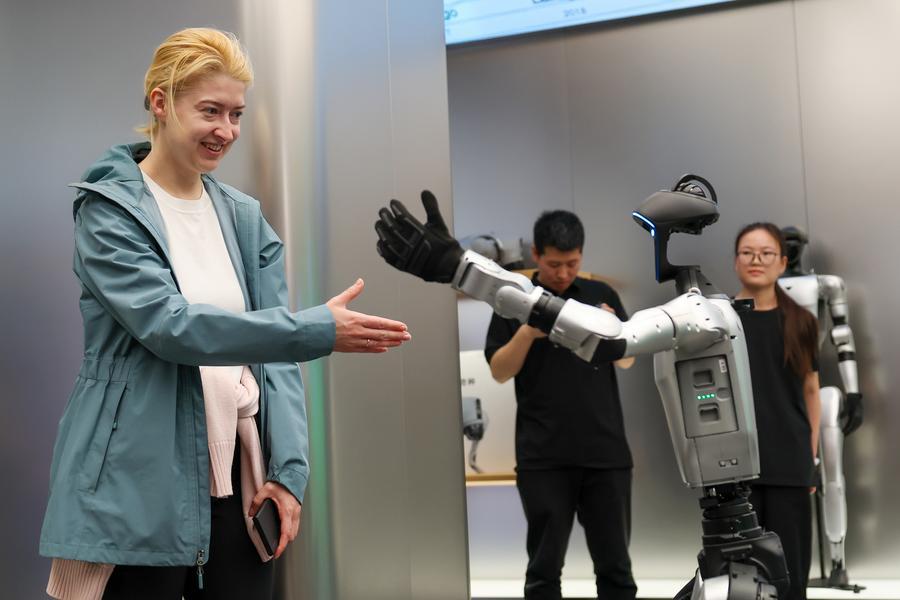
Since opening in Shanghai in May, Unitree Robotics's first embodied intelligence experience store in Asia has attracted many foreign visitors.
Victoria, from Denmark, visited the store last month. "I've seen some of the dancing videos, but it's really cool to see them in real life," she said, viewing the development of AI and robotics in China as "revolutionary, new and exciting."
FROM AI USERS TO AI CREATORS
Today's children are growing up as AI natives, already fluent in AI tools. But AI study camps are opening a new window onto how the technology is reshaping the world around them and how they can use it to make a difference.
For Liang Yiduo, a Beijing middle school student, an AI summer camp run by internet giant NetEase offered a fresh perspective on the AI technology he thought he already knew.
"I realized that large language models aren't just chatbots or simple tools," he said. "They can be assistants that work alongside you and help you create things tailored to your needs, like 'claws.'"
"The goal of the study camp is to help children move from simply using AI to understanding it, creating with it and even building their own AI agents," said Wang Lijin, director and founder of Beijing Venus Future Education Consulting Center, which assists NetEase in running its study camps.
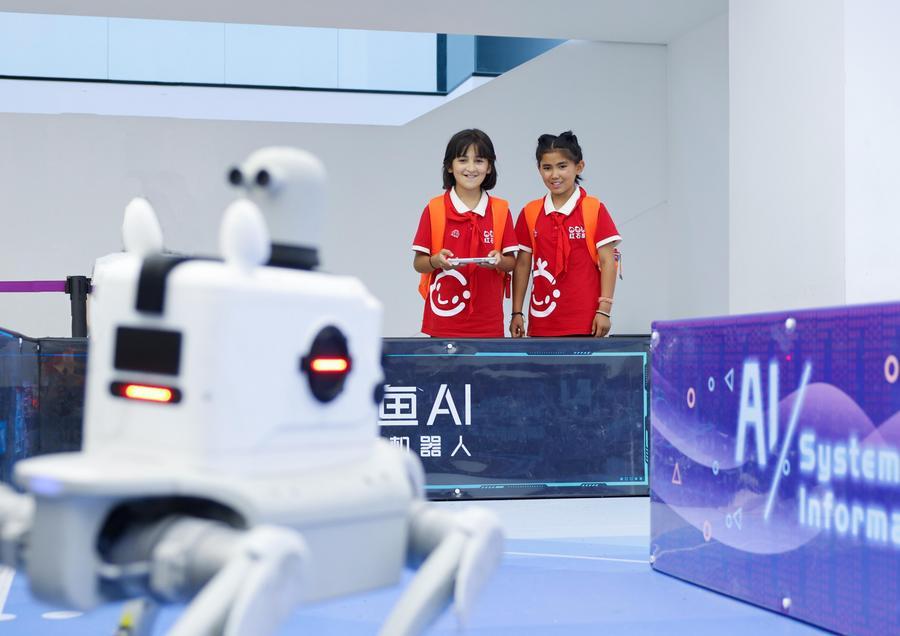
Some study tour organizers design programs around students' interests and abilities, aiming to spark curiosity and encourage deeper thinking.
Shanghai Qingbao Robot Co., Ltd., for example, offers students who enjoy building things the chance to assemble robotic arms and explore the mechanics of shoulder and neck structures. It also gives students a comparative look at the robotics and AI industries in China, the US, Europe and Japan, helping them gain a more balanced understanding of China's strengths and shortcomings.
Wang Lei, the company's chairman, believes that study tours can greatly broaden students' horizons in science and innovation. "Through immersive study tours, students start thinking for themselves about how robotics can be applied to everyday life, from unmanned retail to automated pharmacies," he said.
Some students are taking it a step further, learning to spot real-world problems and use AI to develop solutions.
In the southern Chinese city of Shenzhen, a group of students spent six days in a camp turning ideas into an AI-powered product.
"I've realized that learning AI isn't about showing off what I can do with it, but about using it to solve real problems for others," said one team member. "I want to keep learning AI so I can help more people in the future."
。

B | 19일 윤석열 대통령 구속 소식을 들은 일부 윤 대통령 지지자들이 불법폭력사태를 일으킨 서울 마포구 서울서부지방법원에서 한 작업자가 복구 작업을 하고 있다. 연합뉴스대법원 법원행정처가 지난해 1월 '서울서부지법 폭동 사태' 당시 가담자들을 상대로 피해복구비용 11억 여 원을 배상하라는 민사소송을 냈다.법원행정처는 26일 "서부지법 폭동사태에 가담해 유죄판결이 확정된 5명을 상대로 물적 피해로 인한 복구비용 11억 7589만 9770원과 지연손해금을 구하는 손해배상청구 소송을 서울중앙지법에 제기했다"고 밝혔다. 원고는 대한민국이고, 소관청은 법원행정처다.작년 1월 19일 윤석열 전 대통령에 대한 구속영장이 발부되자 격분한 지지자들은 서울서부지법에 난입해 건물을 마구 부수고 이를 막는 경찰관까지 폭행하는 등 난동을 부렸다.법원행정처는 "폭동 사태로 막대한 피해가 발생했다"며 "서울서부지법 청사는 유리창과 출입문, 외벽, 내부 사무실 집기와 전산설비 등 다수 시설물이 심각하게 파손되고 소속 공무원들은 심각한 정신적 충격을 받았다"고 설명했다.이어 "이는 국가의 사법 작용이 이뤄지는 법원 청사에 대한 집단적 폭력·파괴 행위로서, 단순한 기물 파손이나 폭력행위를 넘어 국민의 기본권 수호와 법치주의의 최후 보루인 법원의 기능과 권위를 심각하게 훼손한 중대한 불법행위"라고 지적했다.그러면서 "헌정 질서를 문란케 하고 사법부의 독립을 정면으로 위협했으며, 법치주의와 민주주의의 근간을 뒤흔든 중대한 사건인 이 폭동에 가담한 사람들에 대해 법적 책임을 묻는 것은 반드시 필요하다"고 덧붙였다.。
Current article:http://0i9.miaorediancuisuilianzouguang.cyou/list_98ja/v6s.html
Published on:16:56:54