机械师
Tech exchange drives China-Cambodia industrial cooperation at Phnom Penh machinery show_我的网站

一 |
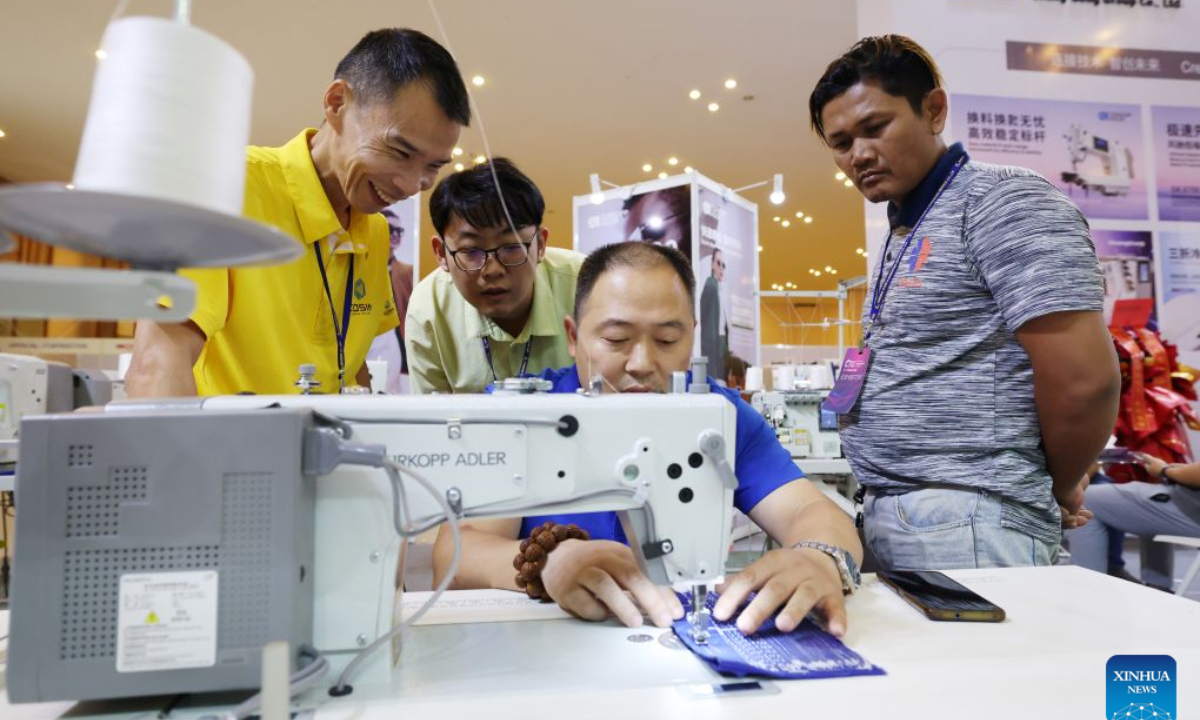
The four-day expo, which runs from Thursday to Sunday, features more than 200 local and international exhibitors.
A significant portion of these participants comprises Chinese companies across four core sectors: machinery and automation, textiles and garments, plastics and rubber, and printing and packaging.
Organized by Yorkers Trade & Marketing Service Co., Ltd. in collaboration with the Ministry of Industry, Science, Technology & Innovation, the expo provided a platform to showcase emerging industrial technologies, foster business connections and support the modernization of Cambodia's manufacturing sector.
According to official ministry data, Cambodia had 3,357 operational factories as of July 2026. These facilities employ over 1.35 million workers, more than 70 percent of whom are women.
Total factory investment in the kingdom reached approximately 28 billion U.S. dollars, a 29 percent increase compared to the same period in 2025. Additionally, industrial production during the first half of 2026 was valued at over 9.8 billion dollars, including roughly 7.3 billion dollars in goods manufactured for export.
Cambodian Minister of Industry, Science, Technology and Innovation Hem Vanndy urged Cambodian enterprises to embrace advanced technologies to boost productivity, improve quality, and sharpen their competitive edge.
"Artificial intelligence, production-line automation, robotics, digital technologies and smart manufacturing are increasingly determining the competitiveness of nations," he said during the expo's opening ceremony on Thursday.
"Cambodia cannot remain outside this transformation," Vanndy said. "We must embrace new technologies to increase productivity, reduce costs, improve product quality and strengthen the competitiveness of our enterprises."
Chim Vinly, the expo's organizing staff member, said the exhibition plays a vital role in introducing innovative manufacturing technologies to Cambodia's garment sector, as attendees can explore a diverse range of advanced machinery designed to elevate production standards.
"Most exhibitors represent the textile and garment industries, with the majority being local and Chinese companies," he told Xinhua on Saturday.
"These advanced manufacturing tools have boosted productivity and modernized local production chains. In particular, they make work faster and more efficient," he added.
Vinly said the annual event plays a vital role in further expanding bilateral trade between China and Cambodia.
"Chinese investment is crucial to boosting Cambodia's economic growth and generating job opportunities for the local workforce," he said.
Bo Seyma, a mechanic at Kosin Sewing Machine Co., Ltd., which supplies Cambodian factories with equipment from the Shanghai-based Shang Gong Group, said the expo is vital for showcasing cutting-edge machinery to the local garment industry.
He said the Kosin company is promoting sewing, embroidery, button, and backstitching machines, along with other equipment, to factories in Cambodia.
"These industrial machines are in high demand, with numerous factories placing purchase orders with our company," he told Xinhua on Saturday.
Seyma said these advanced machines are high-quality and built to last.
"These machines accelerate production efficiency while effortlessly meeting customer demands," he said.
Thong Mengdavid, deputy director at the China-ASEAN Studies Center of the Cambodia University of Technology and Science, said that Cambodia, a country heavily dependent on textiles and garments, has seen its cooperation with China evolve from providing raw materials like fabrics and finished consumer goods toward technological cross-pollination.
This allows local Cambodian plant managers and entrepreneurs to evaluate high-grade machinery directly, he added.
"Integrating China's technology, machinery, and tools into Cambodian factories will address several challenges in the local economy, such as enhancing output per hour, reducing material waste caused by human error, and fostering skill development among the workforce," Mengdavid said.
。
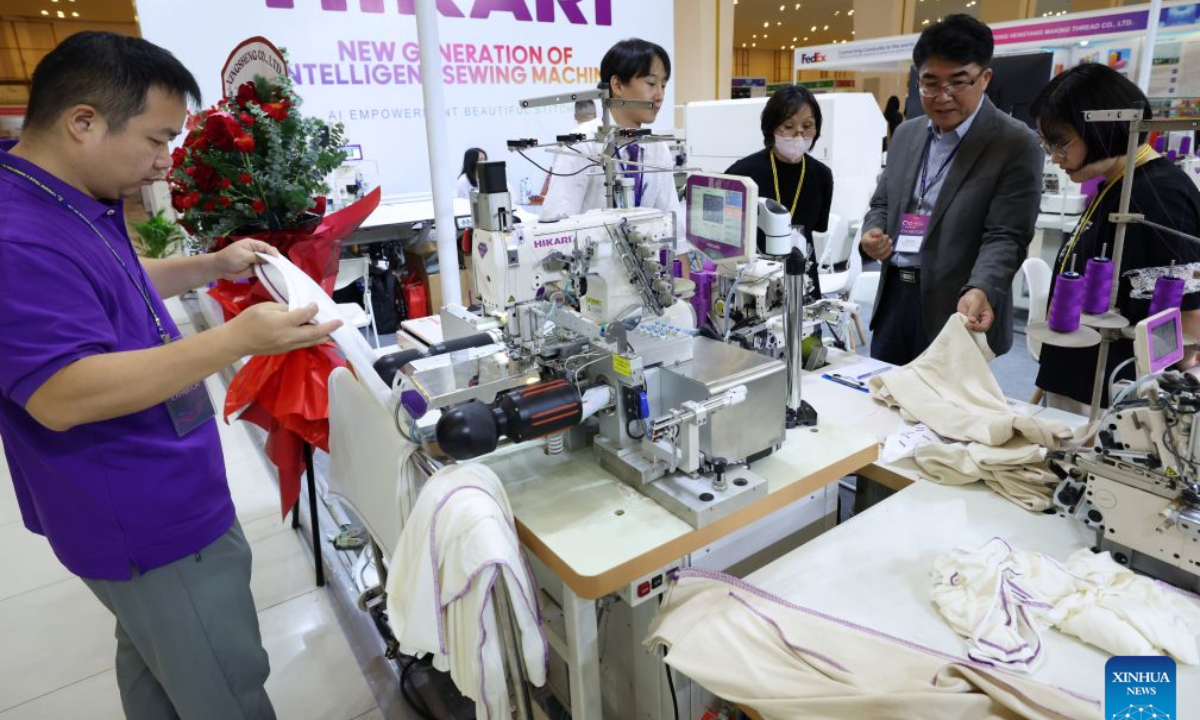
The four-day expo, which runs from Thursday to Sunday, features more than 200 local and international exhibitors.
A significant portion of these participants comprises Chinese companies across four core sectors: machinery and automation, textiles and garments, plastics and rubber, and printing and packaging.
Organized by Yorkers Trade & Marketing Service Co., Ltd. in collaboration with the Ministry of Industry, Science, Technology & Innovation, the expo provided a platform to showcase emerging industrial technologies, foster business connections and support the modernization of Cambodia's manufacturing sector.
According to official ministry data, Cambodia had 3,357 operational factories as of July 2026. These facilities employ over 1.35 million workers, more than 70 percent of whom are women.
Total factory investment in the kingdom reached approximately 28 billion U.S. dollars, a 29 percent increase compared to the same period in 2025. Additionally, industrial production during the first half of 2026 was valued at over 9.8 billion dollars, including roughly 7.3 billion dollars in goods manufactured for export.
Cambodian Minister of Industry, Science, Technology and Innovation Hem Vanndy urged Cambodian enterprises to embrace advanced technologies to boost productivity, improve quality, and sharpen their competitive edge.
"Artificial intelligence, production-line automation, robotics, digital technologies and smart manufacturing are increasingly determining the competitiveness of nations," he said during the expo's opening ceremony on Thursday.
"Cambodia cannot remain outside this transformation," Vanndy said. "We must embrace new technologies to increase productivity, reduce costs, improve product quality and strengthen the competitiveness of our enterprises."
Chim Vinly, the expo's organizing staff member, said the exhibition plays a vital role in introducing innovative manufacturing technologies to Cambodia's garment sector, as attendees can explore a diverse range of advanced machinery designed to elevate production standards.
"Most exhibitors represent the textile and garment industries, with the majority being local and Chinese companies," he told Xinhua on Saturday.
"These advanced manufacturing tools have boosted productivity and modernized local production chains. In particular, they make work faster and more efficient," he added.
Vinly said the annual event plays a vital role in further expanding bilateral trade between China and Cambodia.
"Chinese investment is crucial to boosting Cambodia's economic growth and generating job opportunities for the local workforce," he said.
Bo Seyma, a mechanic at Kosin Sewing Machine Co., Ltd., which supplies Cambodian factories with equipment from the Shanghai-based Shang Gong Group, said the expo is vital for showcasing cutting-edge machinery to the local garment industry.
He said the Kosin company is promoting sewing, embroidery, button, and backstitching machines, along with other equipment, to factories in Cambodia.
"These industrial machines are in high demand, with numerous factories placing purchase orders with our company," he told Xinhua on Saturday.
Seyma said these advanced machines are high-quality and built to last.
"These machines accelerate production efficiency while effortlessly meeting customer demands," he said.
Thong Mengdavid, deputy director at the China-ASEAN Studies Center of the Cambodia University of Technology and Science, said that Cambodia, a country heavily dependent on textiles and garments, has seen its cooperation with China evolve from providing raw materials like fabrics and finished consumer goods toward technological cross-pollination.
This allows local Cambodian plant managers and entrepreneurs to evaluate high-grade machinery directly, he added.
"Integrating China's technology, machinery, and tools into Cambodian factories will address several challenges in the local economy, such as enhancing output per hour, reducing material waste caused by human error, and fostering skill development among the workforce," Mengdavid said.
。
Current article:http://0i9.miaorediancuisuilianzouguang.cyou/agz/r3p40m.html
Published on:13:44:26
淄博新闻


- ·4,285-meter cliffside canal in Chongqing draws photographers, hikers
- ·世界上最后一只金冠夏威夷蜗牛死了,14年来一直没有找到配偶。
- ·“红灯停表”实施近一月:苏州外卖骑手闯红灯率下降 27.5%,事故率下降 12.4%
- ·Women Hoarding Birth Control, Abortion Pills After Roe v Wade Overturned, Media Says
- ·《欢迎来龙餐馆》豆瓣评分涨至8.7,目前电影票房已超16亿,沈腾主演电影票房已破430亿
- ·「読めますか…?」マクドナルド、ポケベル画像でメッセージ発信 世代「簡単に読めちゃった」…裕木奈江も反応
- ·아라역 직결 ‘롯데캐슬 넥스티엘Ⅱ’ 내달 입주…역세권 주거단지 관심


